
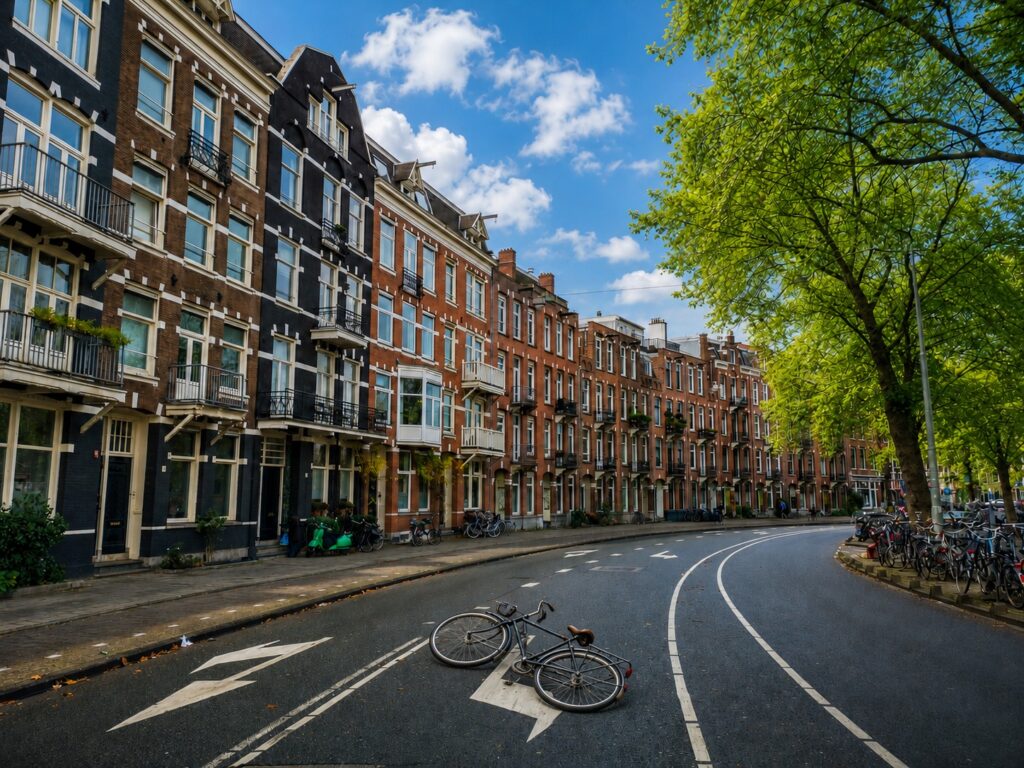
Bicycle accident in Amsterdam West
Cyclist hit by a turning delivery van in Amsterdam West: who is liable?
Amsterdam West has many roads where cars, delivery vehicles, scooters and cyclists cross each other within a limited amount of space. Around Pieter Calandlaan, Meer en Vaart, Osdorpplein and Station Lelylaan, one turning movement can be enough to cause a serious bicycle accident.
The situation described below is based on circumstances that commonly arise in personal injury claims. It does not relate to one identifiable client or one completed case.
A familiar traffic situation in Amsterdam West
Consider an international employee cycling to work through Amsterdam Nieuw-West. At a junction near Pieter Calandlaan, a delivery van turns across the cycle lane. The driver has seen the main road, but notices the cyclist too late. The cyclist is struck, falls onto the road and lands heavily on one shoulder and wrist.
At first, the injuries may appear manageable. The cyclist can still stand and the bicycle is only partly damaged. Later that day, however, the shoulder becomes increasingly painful. The wrist starts to swell and normal activities such as typing, lifting groceries and sleeping become difficult.
This type of accident can lead to a personal injury claim even when the victim was able to leave the scene without an ambulance. What matters is not only how the accident looked at the time, but also how the injuries develop and affect work, daily life and recovery. An injury lawyer in Amsterdam West can assess the local traffic situation, liability and the consequences of the injury.
Who is liable when a vehicle turns across a cycle lane?
A driver who turns across a cycle lane must pay close attention to cyclists travelling straight ahead. In many situations, the cyclist has priority. However, the insurer will still examine the exact circumstances of the accident.
Relevant questions may include:
- Where did the van start turning?
- Was the cyclist visible to the driver?
- Were there parked vehicles or other obstacles?
- Which traffic signs, markings or lights applied?
- Did witnesses see the collision?
- Are photographs or camera recordings available?
The delivery company or its insurer may accept that a collision occurred but still dispute parts of the claim. It may argue that the cyclist was travelling too fast, was not sufficiently visible or could have avoided the accident. That is why evidence from the scene can be important. More information about the legal position of injured cyclists can be found on our page about bicycle accident claims.
What evidence should be collected?
After a bicycle accident, it is useful to record as much information as possible. Photographs of the junction, the vehicle, the bicycle and visible injuries can help reconstruct what happened. Witness names and contact details may also be valuable.
The victim should also seek medical attention. A doctor can assess the injuries and record when the complaints began. This medical documentation helps connect the physical complaints to the accident.
Useful evidence can include:
- Photographs of the accident location;
- Contact details of witnesses;
- A completed accident statement;
- Medical records and treatment notes;
- Receipts for travel, medication and damaged belongings;
- Information from the employer about missed work;
- Messages or correspondence with the driver or insurer.
Why medical documentation matters
In the days after the collision, the cyclist may visit a general practitioner or emergency department. The wrist may be bruised or fractured, while the shoulder injury may require physiotherapy or further examination.
Some complaints also become clear only after several days. Pain can increase when the victim returns to work, tries to cycle again or carries out normal household tasks. Sleeping problems, anxiety in traffic and loss of concentration can also affect recovery.
An insurer may ask whether the complaints were already present before the accident or whether the victim waited too long before seeking treatment. Prompt and consistent medical documentation can help answer those questions.
Loss of income after a bicycle accident
The financial consequences depend heavily on the victim’s work. An office employee may struggle to type or use a computer because of wrist and shoulder pain. A hospitality worker, courier, construction worker or healthcare professional may be unable to perform physical tasks at all.
An employee may continue to receive salary during part of the recovery period, but that does not always mean there is no financial damage. Overtime, allowances, bonuses or future career opportunities may be affected.
The consequences can be even more direct for a freelancer or self-employed professional. Cancelled assignments, reduced working hours and the cost of replacement assistance may form part of the claim. Evidence such as invoices, contracts, previous earnings and planned assignments can help calculate the loss.
Household help and other less visible damage
Personal injury compensation is not limited to medical expenses and lost income. A shoulder or wrist injury can make ordinary activities difficult, including cooking, cleaning, shopping, childcare and personal care.
If family members or friends temporarily take over these tasks, the need for assistance may still be relevant to the claim. The same applies when the victim has to use taxis or public transport because cycling is no longer possible.
Other possible damage includes:
- Damage to the bicycle, clothing, telephone or laptop;
- Medical expenses not fully covered by insurance;
- Travel expenses for treatment and appointments;
- Costs of household or personal assistance;
- Loss of income or business turnover;
- Cancelled activities or travel plans;
- Compensation for pain, inconvenience and reduced enjoyment of life.
Our personal injury calculator can give a first indication of the types of damage that may be relevant, although the final claim always depends on the individual circumstances.
Why an early settlement can be risky
An insurer may contact the cyclist soon after the accident and offer to reimburse the damaged bicycle or the first medical expenses. That can seem helpful, particularly when the victim is unfamiliar with the Dutch legal system.
However, the full consequences may not yet be known. The injury could require months of treatment or continue to affect work and daily life. Once a final settlement has been accepted, it may be difficult to claim additional compensation later.
Before agreeing to a final amount, the victim should understand which injuries have been diagnosed, how recovery is progressing and whether future damage is likely. A personal injury lawyer can help assess whether an offer reflects the full value of the claim.
Legal help after a bicycle accident in Amsterdam West
A local traffic situation can involve detailed questions about priority, visibility, road markings and the behaviour of several road users. Injury Lawyer assists international victims in English and can communicate with the insurer on your behalf.
The aim is to document both the immediate consequences and the effects that continue during recovery, so the claim is not limited to the first visible expenses.
What should you do after a bicycle accident?
- Move to a safe place and seek medical help when needed.
- Take photographs of the road, vehicles, bicycle and injuries.
- Collect witness details and exchange information with the driver.
- Report the accident and keep copies of all documents.
- Save receipts and record how the injury affects work and daily life.
- Do not accept a final settlement before the consequences are clear.